Introduction
Hormone replacement therapy (HRT) has been a cornerstone of personalized medicine for decades, providing relief and support to individuals experiencing hormonal imbalances. Initially developed to manage menopausal symptoms, HRT has evolved to address a variety of conditions, including testosterone deficiency in men, estrogen and progesterone deficiencies in women, and other endocrine disorders.
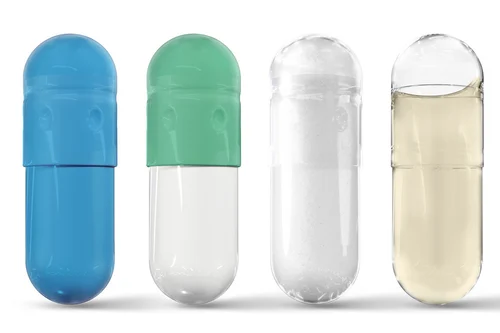
Modern compounding pharmacies are increasingly delivering customized HRT solutions using advanced dosage forms such as liquid-filled hard capsules (LFHCs), allowing precise dosing, improved stability, and enhanced patient adherence.
Explore advanced capsule filling and sealing solutions.
A Brief History of HRT
The concept of HRT dates back to the early 20th century, when clinicians first began experimenting with animal-derived hormone extracts to treat menopause-related symptoms. In the 1940s and 1950s, the isolation of estrogen and progesterone enabled the development of standardized formulations. By the 1960s, oral contraceptives and commercially available HRT tablets became widely used.
Over time, the understanding of hormonal physiology deepened, leading to more targeted therapies and the recognition of potential risks, such as cardiovascular effects or breast cancer. This fueled a move toward individualized therapy, where compounding pharmacies play a vital role in customizing hormone doses, combinations, and delivery methods for specific patient needs (Santen et al., 2020).
Types of Hormones Used in HRT
Common hormones in replacement therapy include:
- Estrogens: Used to alleviate menopausal symptoms like hot flashes, vaginal dryness, and bone loss. Forms include estradiol, conjugated estrogens, and synthetic estrogens.
- Progesterone/Progestins: Often combined with estrogen in women with intact uteri to prevent endometrial hyperplasia.
- Testosterone: Prescribed for men and women with androgen deficiency to support energy, libido, and muscle mass.
- Combination Therapies: Tailored blends of estrogen, progesterone, or testosterone for individualized regimens.
Each hormone presents unique formulation challenges: they are often lipophilic, sensitive to oxidation, and effective at low doses, requiring precise handling to ensure efficacy and safety.
Modern Formulations and Delivery Methods
Historically, HRT was delivered as oral tablets, transdermal patches, or injections. Today, compounded pharmacies expand options for patients who require:
- Personalized doses not available commercially
- Alternative excipients due to allergies or sensitivities
- Specialized delivery forms to improve absorption or convenience
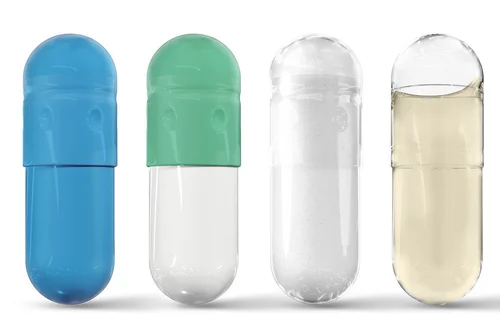
Liquid-filled hard capsules (LFHCs) have emerged as an ideal format for HRT. They allow hormones to be delivered in a solubilized lipid matrix, enhancing bioavailability, controlling dosing, and masking taste or odor. Modern capsule filling and sealing equipment, such as the CFS 1200® machine, enables pharmacies to produce these formulations consistently and safely, supporting patient-specific therapy.
Patient-Centered Considerations
HRT is not just about hormone replacement - it’s about enhancing quality of life. Compounded solutions allow clinicians and pharmacists to:
- Adjust doses to individual hormone levels
- Choose delivery methods tailored to patient preferences
- Reduce risks associated with oxidation-sensitive hormones
- Improve adherence through easy-to-swallow, taste-masked capsules
Automation in liquid capsule filling helps maintain precision, stability, and tamper-evident packaging, ensuring patients receive reliable and effective therapies.
Conclusion
From early animal extracts to today’s sophisticated lipid-based formulations, hormone replacement therapy has evolved dramatically. Compounding pharmacies play a crucial role in delivering personalized HRT, and liquid-filled hard capsules represent a modern, reliable format that addresses dosing precision, stability, and patient-centered needs.
By leveraging advanced filling and sealing technologies, pharmacies can provide customized hormone therapies with confidence, supporting better outcomes and improved patient satisfaction.
Ready to transform your transform your capsule filling process? Explore our CFS 1200® machine advantages
References
- Santen, R. J., Allred, D. C., Ardoin, S. P., Archer, D. F., Boyd, N., Braunstein, G. D., … Stuenkel, C. A. (2020). Postmenopausal hormone therapy: An Endocrine Society scientific statement. The Journal of Clinical Endocrinology & Metabolism, 105(11), 3743–3811.
- Holm, R., Kuentz, M., Ilie-Spiridon, A.-R., & Griffin, B. T. (2023). Lipid-based formulations as supersaturating oral delivery systems: From current to future industrial applications. European Journal of Pharmaceutical Sciences, 189, 106556.
- Woo, S.-W., Hwang, S.-J., & Cho, C.-W. (2023). Liquid-filled hard capsule formulation of choline alfoscerate: In vitro/in vivo evaluation and bioequivalence to softgels. Journal of Pharmaceutical Investigation, 53(4), 517–526.
- Uttreja, P., Karnik, I., Youssef, A. A. A., et al. (2025). Self-emulsifying drug delivery systems (SEDDS): Transition from liquid to solid—A comprehensive review. Pharmaceutics, 17(1), 63.
- Waterman, K. C., & Adami, R. C. (2005). Accelerated aging: Prediction of chemical stability of pharmaceuticals. International Journal of Pharmaceutics, 293(1–2), 101–125.