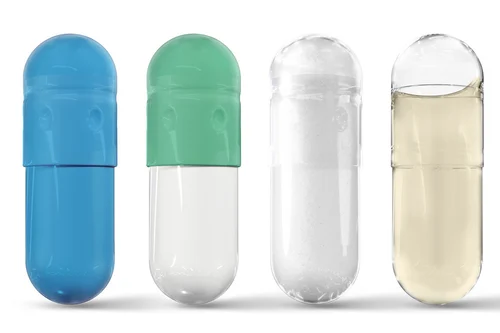
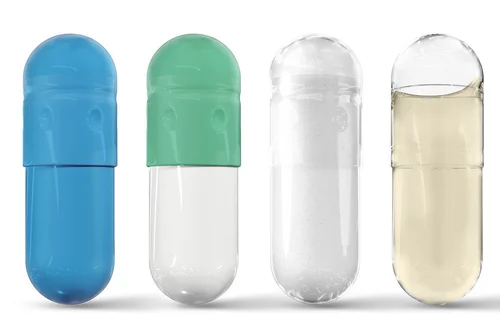
Pharmaceutical and compounding innovation continues to face a persistent challenge: how to effectively deliver active pharmaceutical ingredients (APIs) that are poorly soluble, chemically unstable, or difficult for patients to take consistently. Liquid-filled hard capsules (LFHCs) have emerged as a robust and versatile oral dosage form that addresses these challenges by combining advanced formulation science with precise capsule manufacturing and sealing technologies.
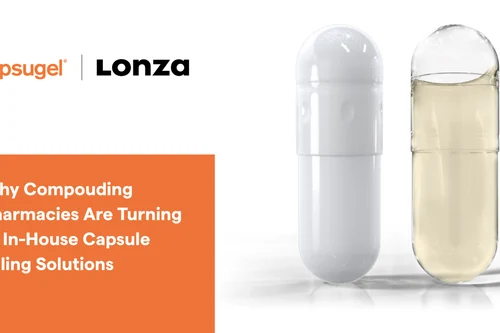
LFHCs consist of a two-piece hard capsule shell—typically made from gelatin or hydroxypropyl methylcellulose (HPMC)—filled with a liquid or semi-solid formulation. By enabling APIs to be delivered in a solubilized or dispersed state, LFHCs improve bioavailability, enhance stability, and support patient-centric and personalized therapies.
Explore advanced capsule filling and sealing solutions.
Why Liquid-Filled Capsules?
Traditional solid oral dosage forms, such as tablets and powder-filled capsules, often struggle to achieve consistent performance when APIs exhibit low aqueous solubility, narrow therapeutic windows, or sensitivity to environmental factors. These limitations are particularly pronounced for compounds classified as Biopharmaceutics Classification System (BCS) Class II and IV.
LFHCs overcome many of these challenges by integrating formulation and delivery into a single dosage unit, offering both biopharmaceutical and practical advantages.
1. Addressing Solubility and Bioavailability Challenges
Poor aqueous solubility remains one of the most significant barriers to oral drug delivery. It is estimated that up to 90% of new chemical entities exhibit limited water solubility, which can result in erratic absorption and reduced therapeutic efficacy.
LFHCs frequently utilize lipid-based formulations (LBFs), including self-emulsifying drug delivery systems (SEDDS), that maintain APIs in a dissolved or molecularly dispersed state throughout gastrointestinal transit. Upon digestion, these systems form fine emulsions or micelles that enhance drug solubilization and absorption. In some cases, lipid-based delivery may also promote lymphatic uptake, thereby bypassing hepatic first-pass metabolism and increasing systemic exposure (Holm et al., 2023; Jeong et al., 2024).
Multiple studies have demonstrated that liquid-filled capsule formulations can significantly outperform conventional solid dosage forms in terms of bioavailability, particularly for poorly soluble compounds (Popat Mohite et al., 2023; Woo et al., 2023).
2. Formulation Versatility and Design Flexibility
Liquid-filled hard capsules offer exceptional flexibility in formulation development, accommodating a wide range of fill materials, including oils, suspensions, solutions, and hot melts. This versatility allows formulators and compounding pharmacies to:
- Combine APIs or excipients that may be incompatible in solid form
- Develop modified or dual-release concepts by co-filling liquids with pellets or mini-tablets
- Optimize excipient selection to improve stability, dissolution, or absorption
In addition, the availability of alternative capsule shell materials—such as HPMC or pullulan—supports moisture-sensitive formulations, vegetarian or clean-label requirements, and broader patient acceptance. These materials also enable compatibility with a wider range of excipient systems, including lipid-based and hygroscopic formulations (Uttreja et al., 2025).
3. Sealing Integrity, Stability, and Product Protection
For liquid-filled hard capsules, sealing integrity is critical to ensure dose accuracy, prevent leakage, and protect sensitive APIs from environmental exposure. Modern LFHC manufacturing incorporates validated sealing technologies, including:
- Fusion sealing, which uses controlled heat and moisture to fuse the cap and body at the interface, creating a strong, tamper-resistant seal.
- LEMS® fusion technology, a patented process to hermetically seal the capsule halves without a band.
- Banding, where a polymer band is applied around the capsule seam as an additional protective layer.
Sealing helps minimize oxygen/moisture ingress and can improve stability for sensitive fills, supporting product robustness without implying universal shelf-life extension.
4. Patient-Centric and Personalized Therapy Advantages
Beyond their technical performance, liquid-filled hard capsules offer meaningful benefits for patients and healthcare providers alike:
- Ease of swallowing: Capsules generally have smoother surfaces and smaller sizes compared to tablets, reducing swallowing difficulties—an issue that affects a significant portion of adult and elderly patients (Harnett et al., 2023).
- Taste and odor masking: The sealed capsule shell effectively isolates unpleasant flavors or smells, improving adherence.
- Flexible and personalized dosing: LFHCs enable dose adjustments by modifying fill volume or concentration without changing the capsule shell, supporting personalized therapies such as hormone replacement therapy (HRT) and targeted nutritional supplementation.
- Improved safety and compliance: Eliminating the need for tablet splitting or crushing reduces dosing variability and medication errors, enhancing treatment consistency.
Conclusion
Liquid-filled hard capsules represent a convergence of formulation innovation, manufacturing precision, and patient-centric design. By addressing solubility and bioavailability challenges, enabling flexible formulation strategies, and supporting personalized dosing, LFHCs have become a strategic dosage form for complex molecules and tailored therapies.
As demand grows for individualized treatments and rapid response in pharmacy compounding, liquid-filled capsules provide a scientifically robust and clinically relevant solution—bridging advanced drug delivery principles with practical, patient-focused care.
In the next article of this series, we explore how liquid-filled capsules are manufactured and why sealing technology plays a critical role in ensuring quality and stability.
Continue exploring: How Liquid-Filled Capsules Are Made—and Why Sealing Technology Matters
References:
- Holm, R., Kuentz, M., Ilie-Spiridon, A.-R., & Griffin, B. T. (2023). Lipid-based formulations as supersaturating oral delivery systems: From current to future industrial applications. European Journal of Pharmaceutical Sciences, 189, 106556.
- Jeong, S.-J., Song, W.-Y., Park, C.-W., & Kim, D.-W. (2024). Recent approaches to investigate drug delivery systems through the lymphatic pathway using oral lipid-based formulations. Journal of Pharmaceutical Investigation, 54, 131–144.
- Popat Mohite, P., Singh, S., Pawar, A., Sangale, A., & Prajapati, B. G. (2023). Lipid-based oral formulation in capsules to improve the delivery of poorly water-soluble drugs. Frontiers in Drug Delivery, 3, 1232012.
- Woo, S.-w., Hwang, S.-J., & Cho, C.-W. (2023). Liquid-filled hard capsule formulation of choline alfoscerate: In vitro/in vivo evaluation and bioequivalence to softgels. Journal of Pharmaceutical Investigation, 53(4), 517–526.
- Uttreja, P., Karnik, I., Adel Ali Youssef, A., et al. (2025). Self-emulsifying drug delivery systems (SEDDS): Transition from liquid to solid—A comprehensive review. Pharmaceutics, 17(1), 63.
- Szweda, N. M., Rapin, M. N., Evans, P., Braun, S., & Hacker, M. C. (2024). Carrageenan-based solutions for the sealing of liquid-filled pullulan hard capsules. PBP World Meeting.
- Harnett, A., Byrne, S., O’Connor, J., Lyons, D., & Sahm, L. J. (2023). Adult patients with difficulty swallowing oral dosage forms: A systematic review. Pharmacy, 11(5), 167.